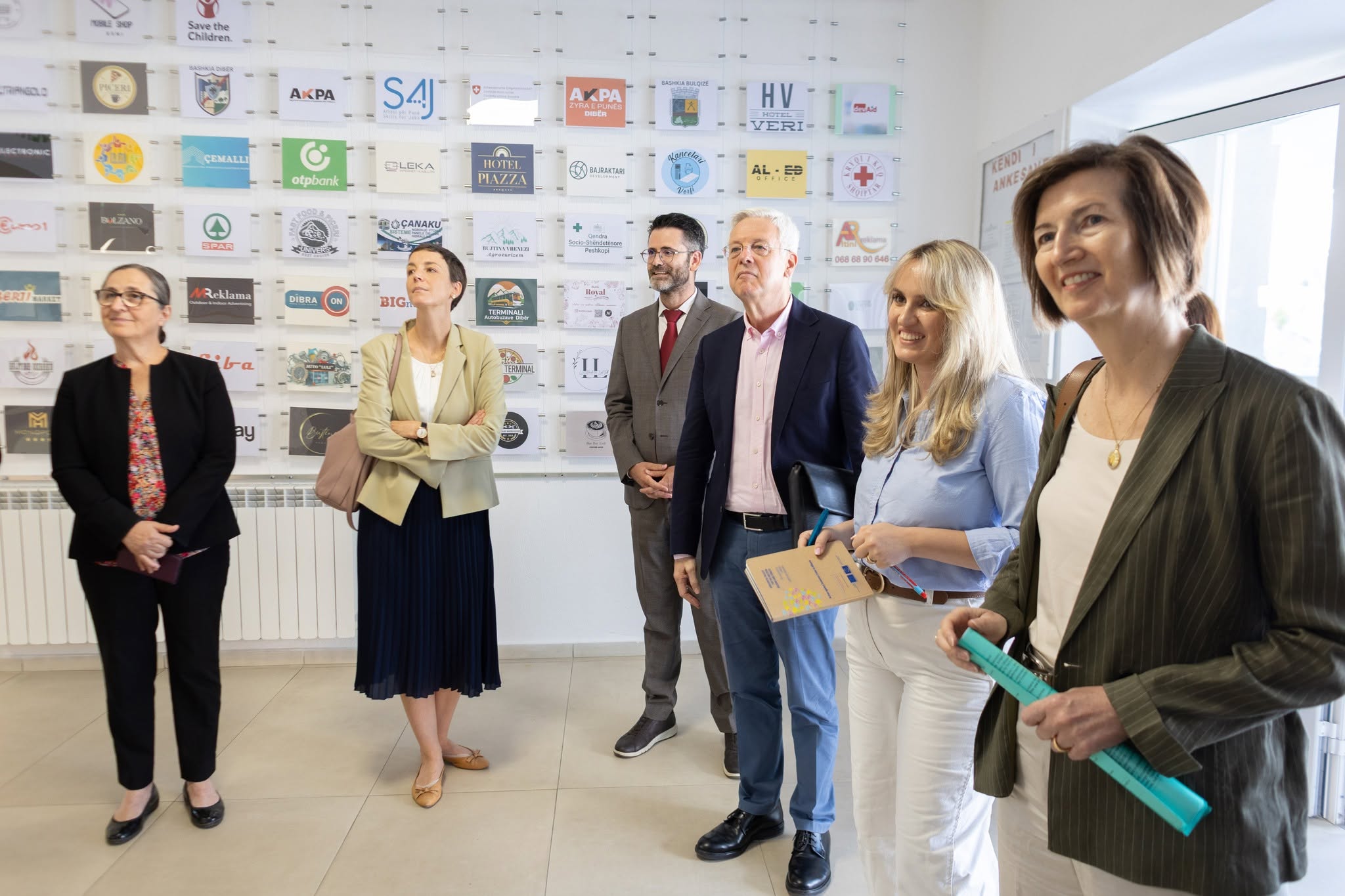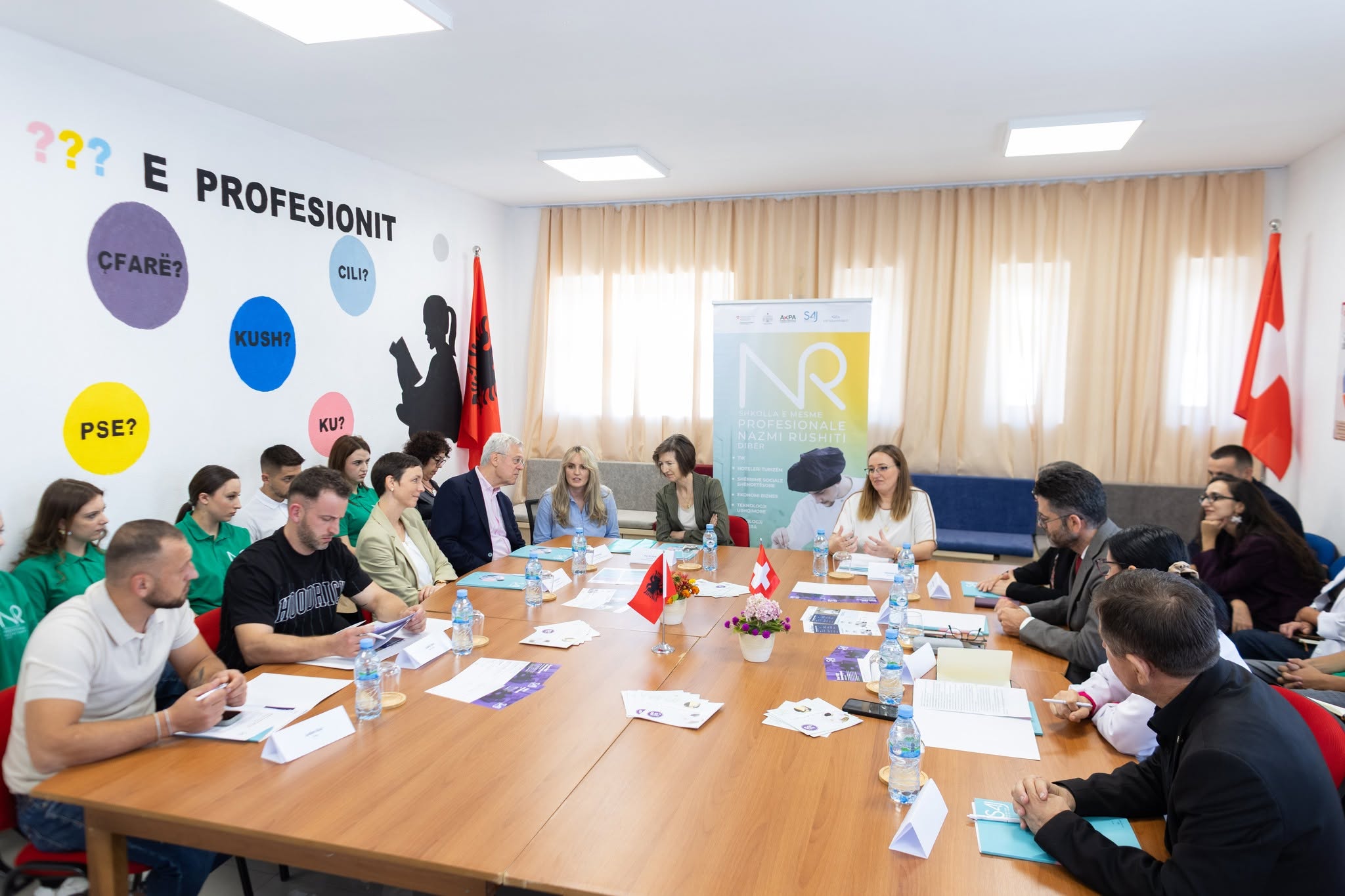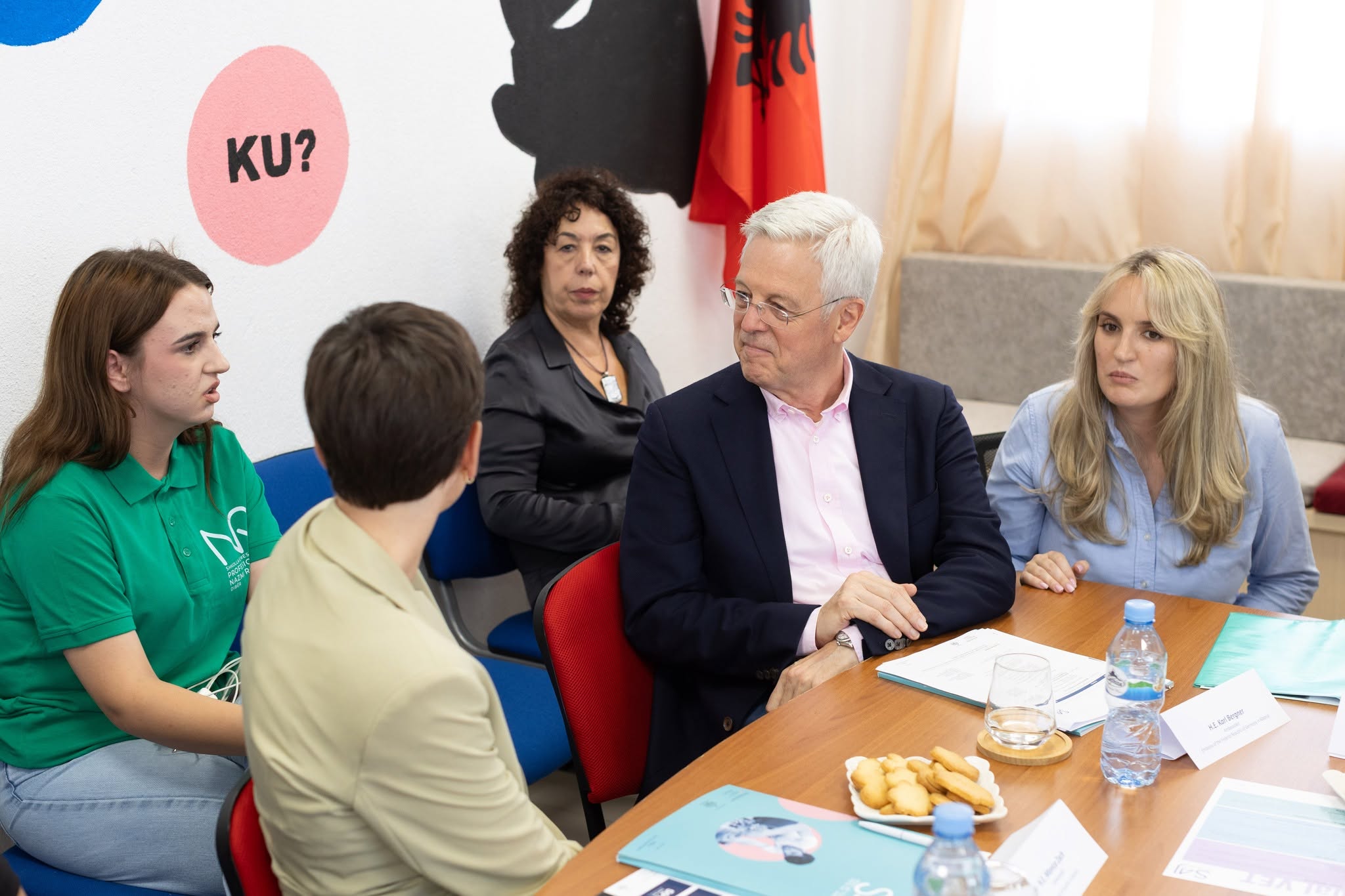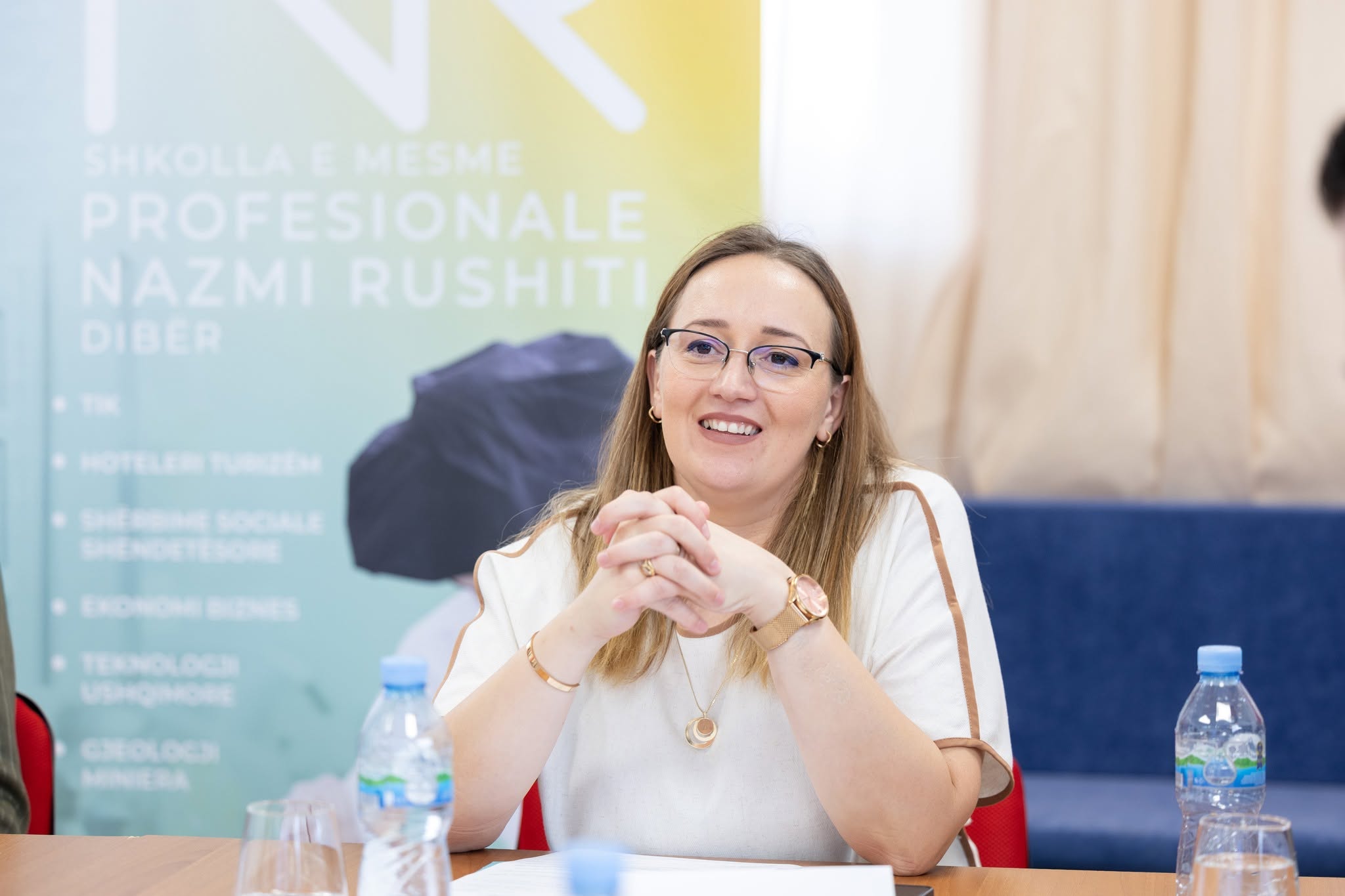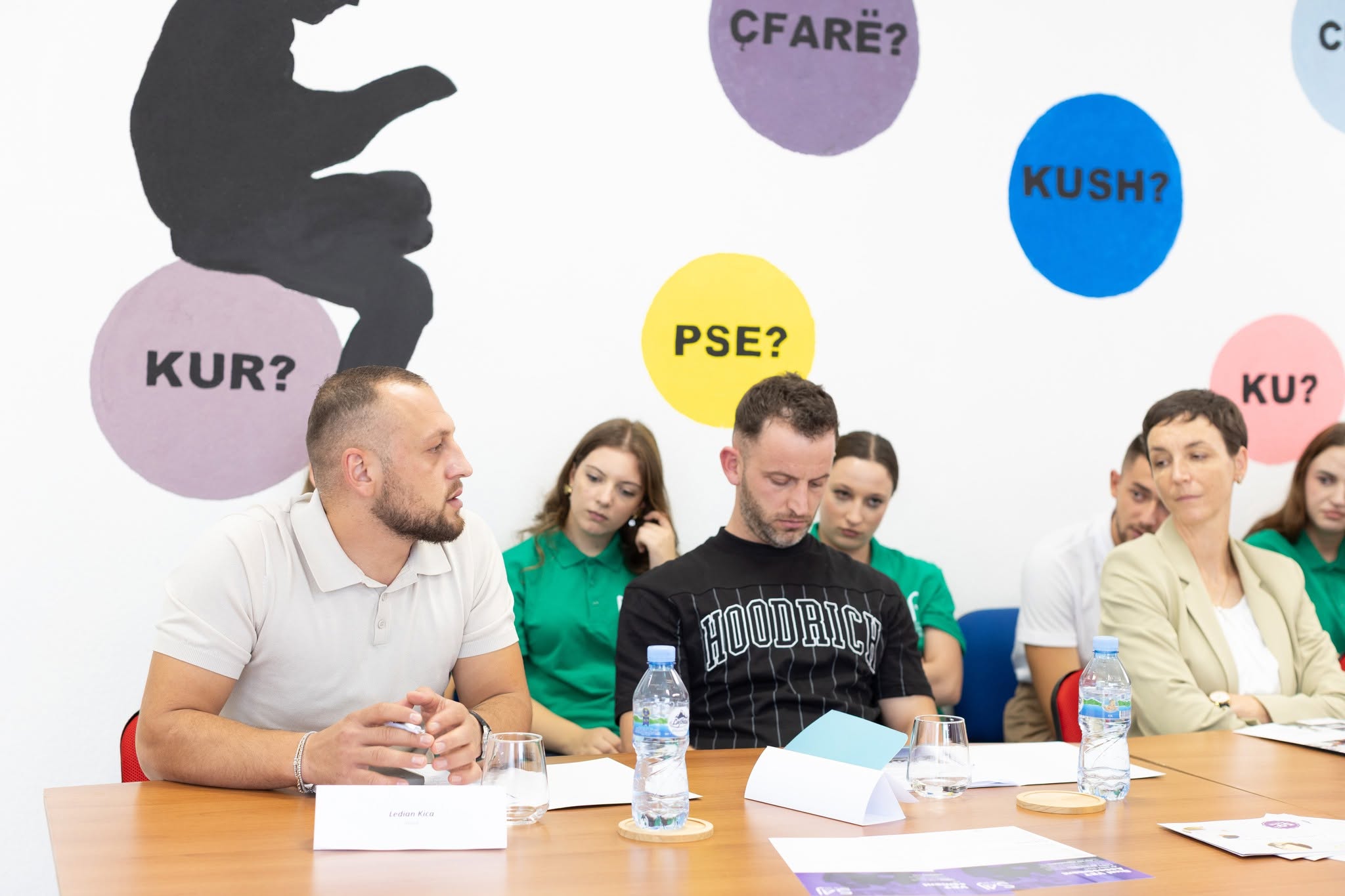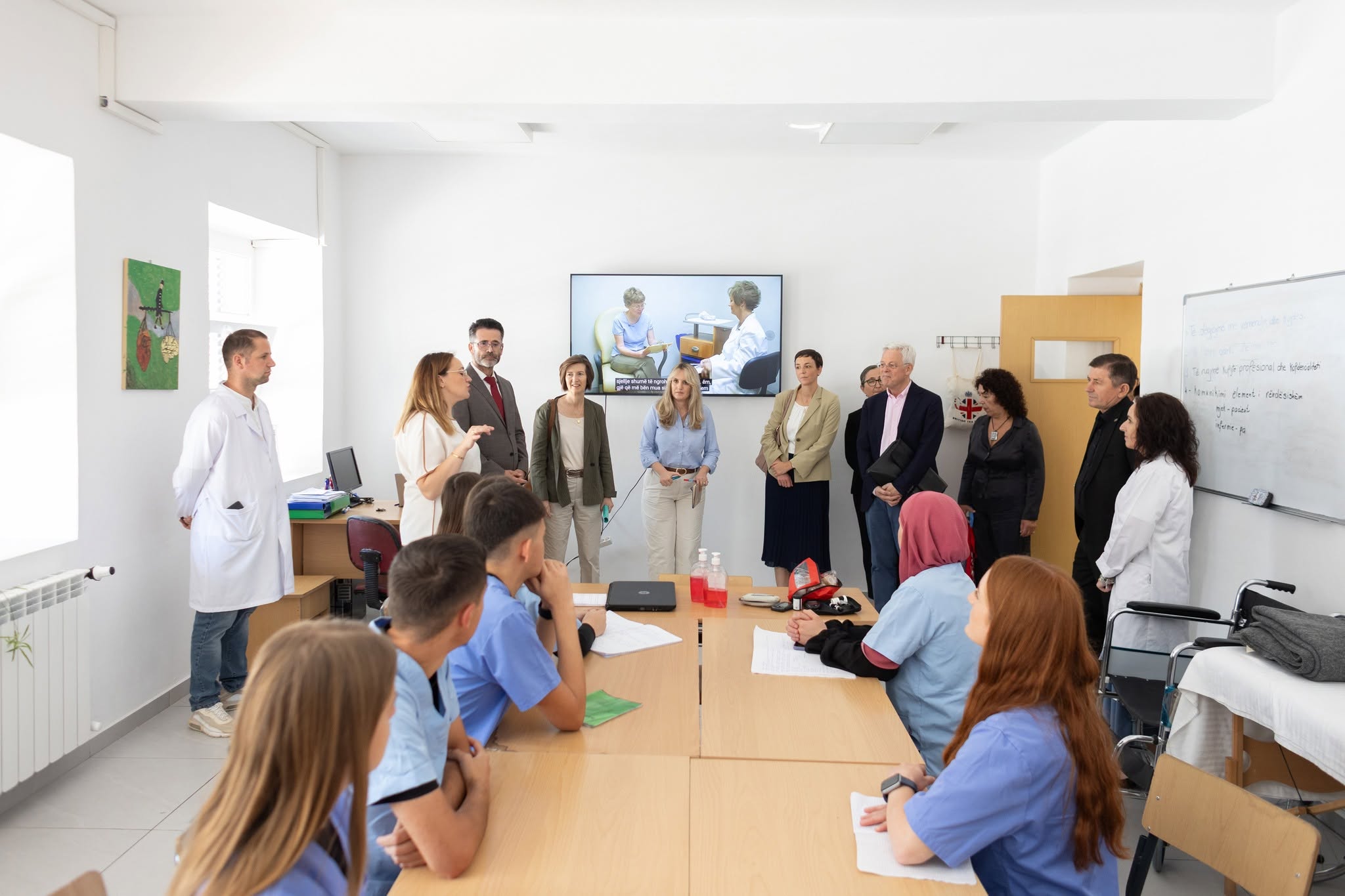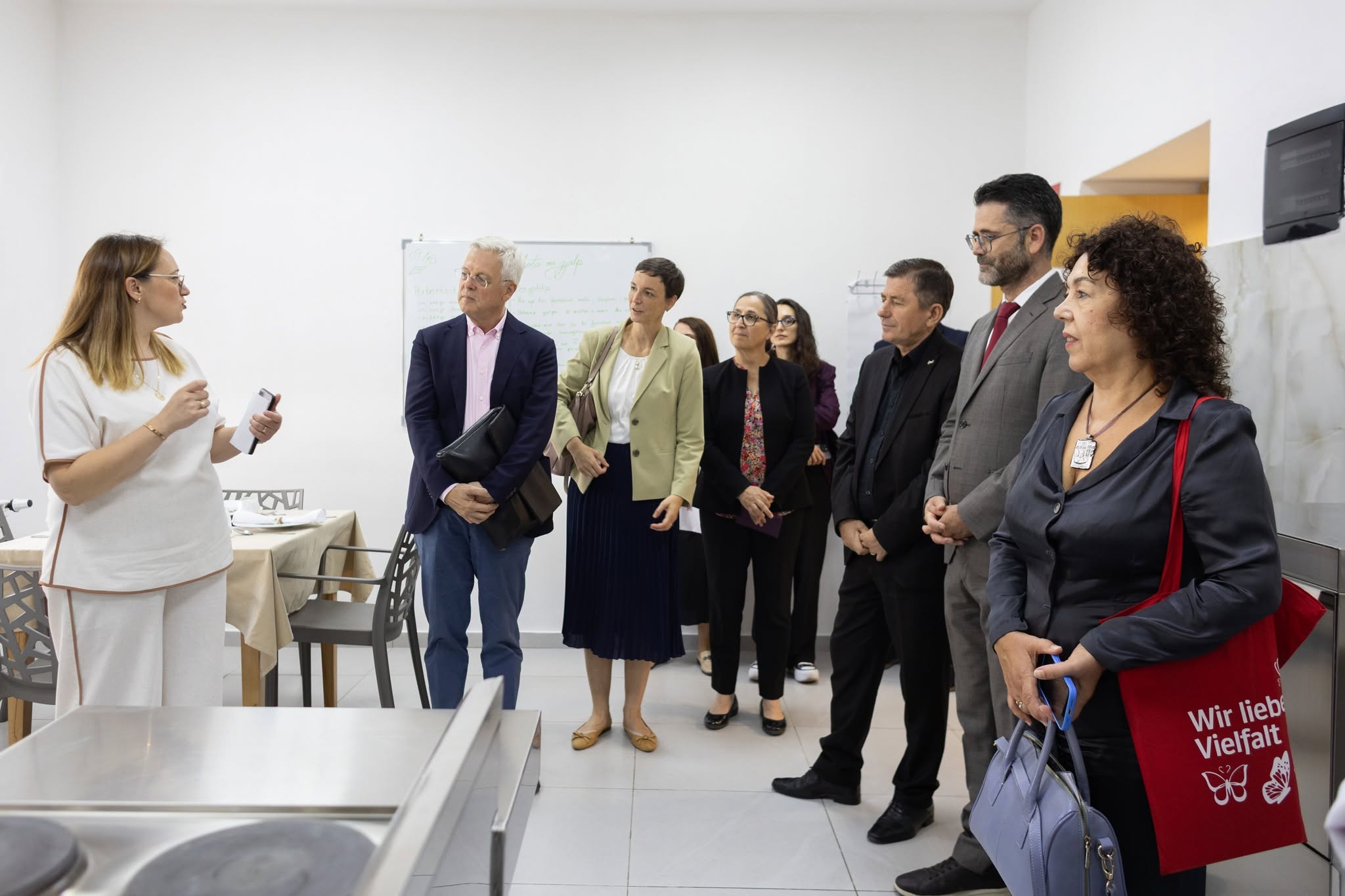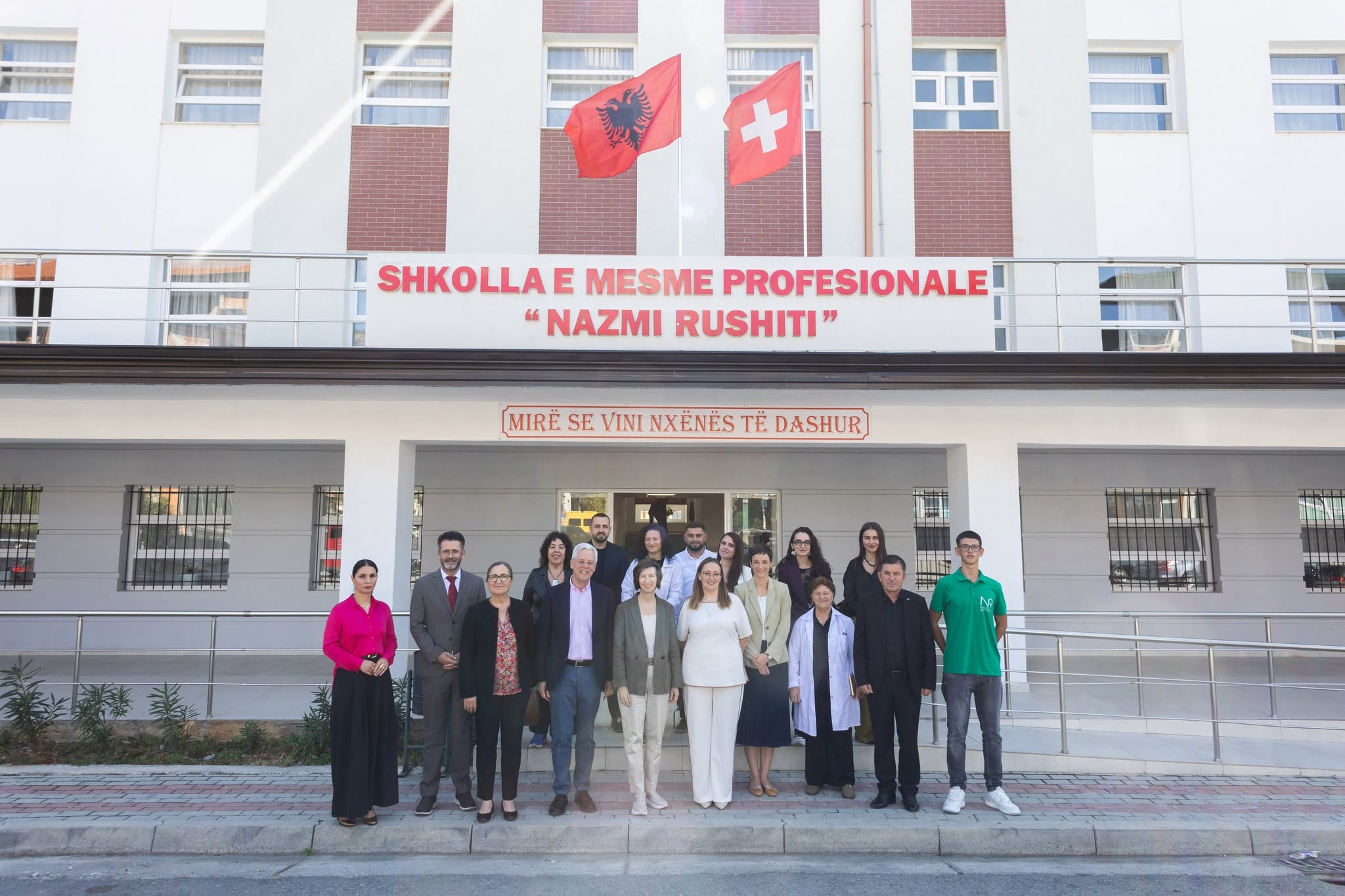
On 18 September, “Nazmi Rushiti” Vocational School in Dibër welcomed a delegation of senior diplomatic representatives from Switzerland, Germany and Austria, for a visit focused on developments in vocational education and training (VET) and priorities for further strengthening the sector in Albania.
The visit brought together Ms. Siri Walt, Ambassador of Switzerland to Albania; Mr. Karl Bergner, Ambassador of the Federal Republic of Germany; Ms. Monica Zach, Ambassador of Austria; and Ms. Argjentina Grazhdani, Swisscontact Country Director for Albania. Taking place at the start of the new school year, the visit provided an opportunity to learn more about the school’s achievements and to discuss priorities and challenges for the period ahead.
During the meeting, Ambassador Siri Walt highlighted the importance that Switzerland, Germany and Austria attach to vocational education as a pathway that provides young people with quality training aligned with labour market needs. She also underlined the value of cooperation among institutions, international partners and sector stakeholders in further advancing vocational education in Albania.
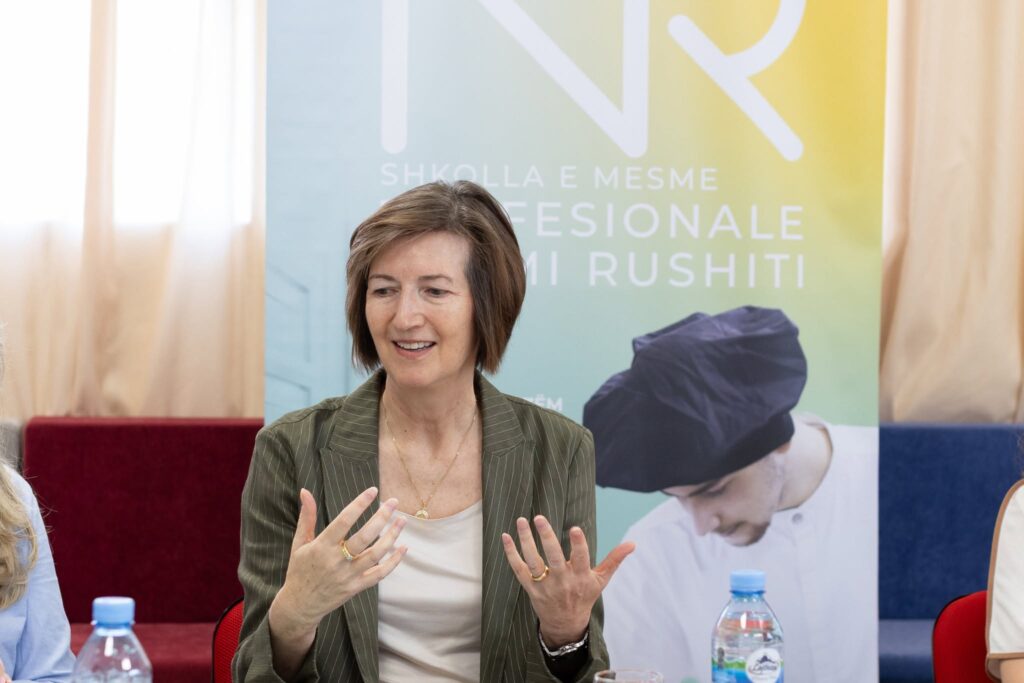
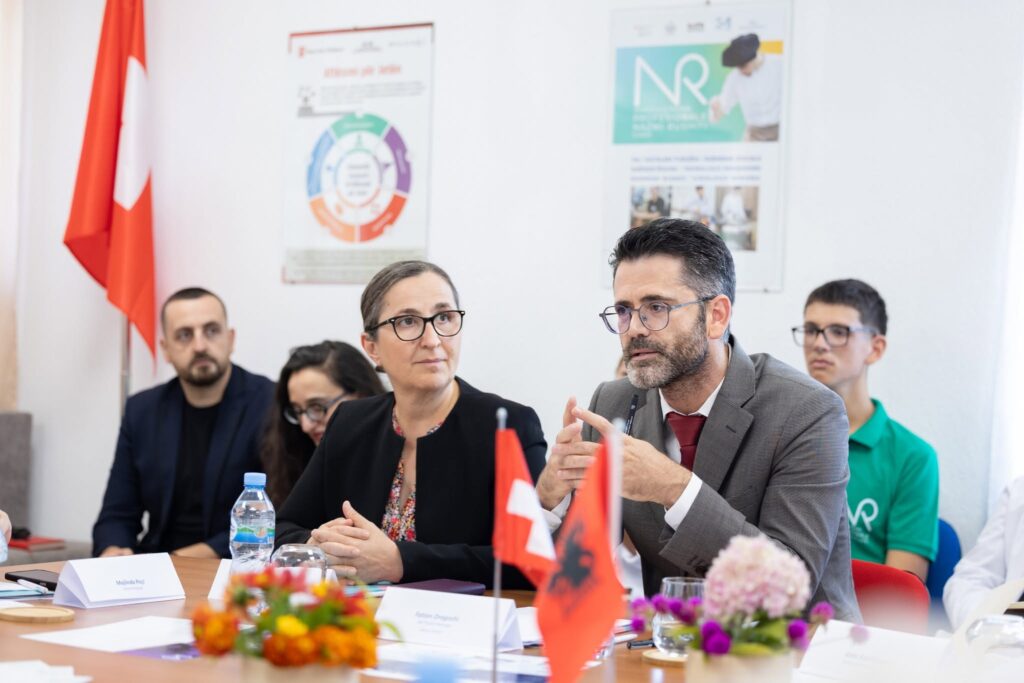
The expansion of the Dual VET model was also a key topic of discussion. Mr. Fation Dragoshi, Project Manager of the Skills for Jobs (S4J) project, emphasised the importance of expanding the model across the country, highlighting its role in bringing education closer to the real needs of industry and enabling young people to develop practical skills demanded by the labour market.
New Developments at “Nazmi Rushiti” School
The visit also provided an opportunity to learn more about some of the school’s key developments. School representatives, students and business partners shared their experiences and presented progress made in different areas of vocational education provision and school management.
Among the key developments presented during the visit were:
- Completion of the school’s accreditation process;
- Consolidation of the graduate tracking system, providing a better understanding of graduates’ outcomes after completing their studies;
- Expansion of the network of business partners, strengthening the link between the school and the labour market;
- The first implementation of level examinations through MësoVET;
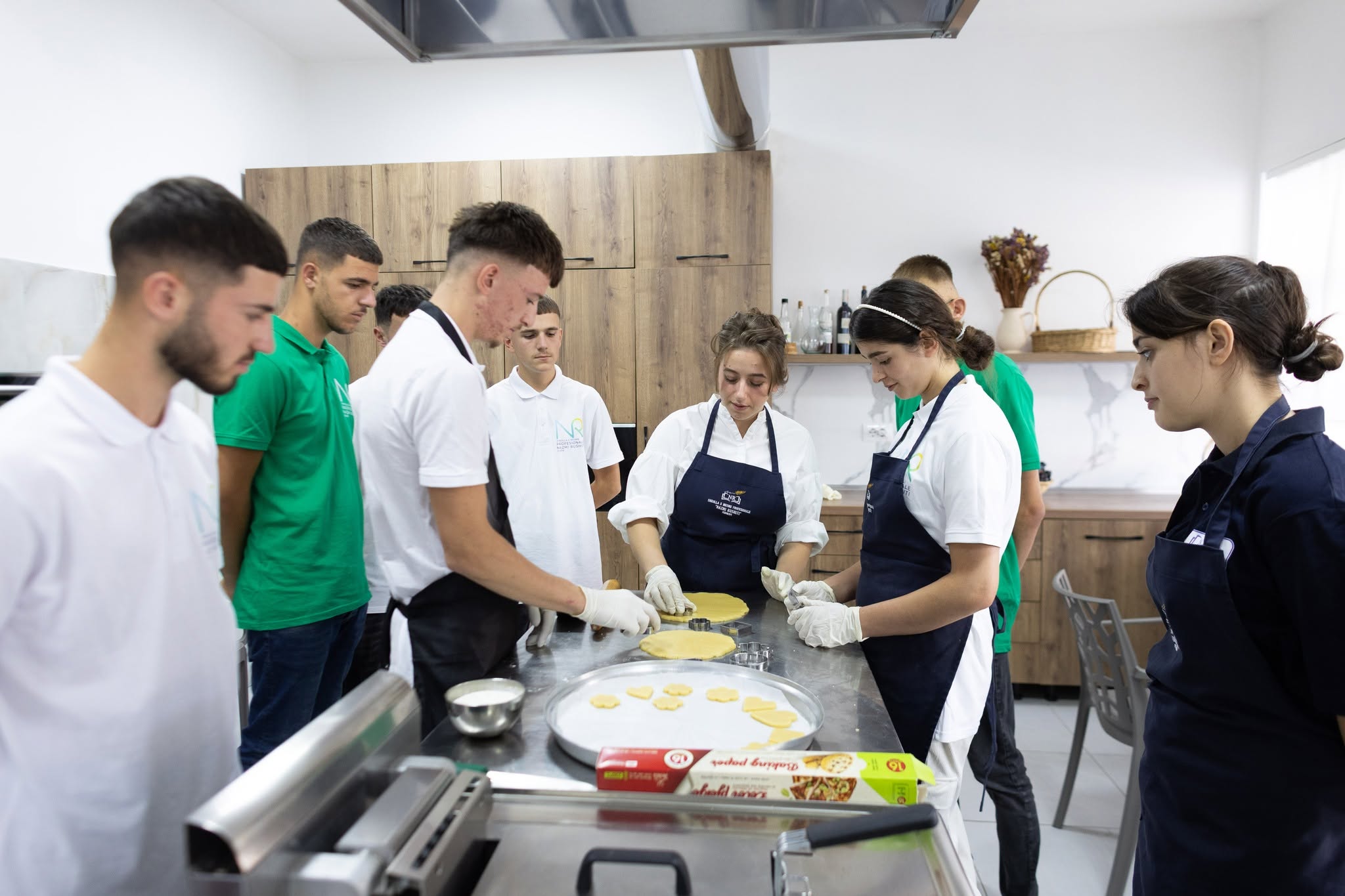
- Piloting of Dual VET in the “Kitchen” qualification, establishing a new model of cooperation between the school and businesses to strengthen students’ practical training.